
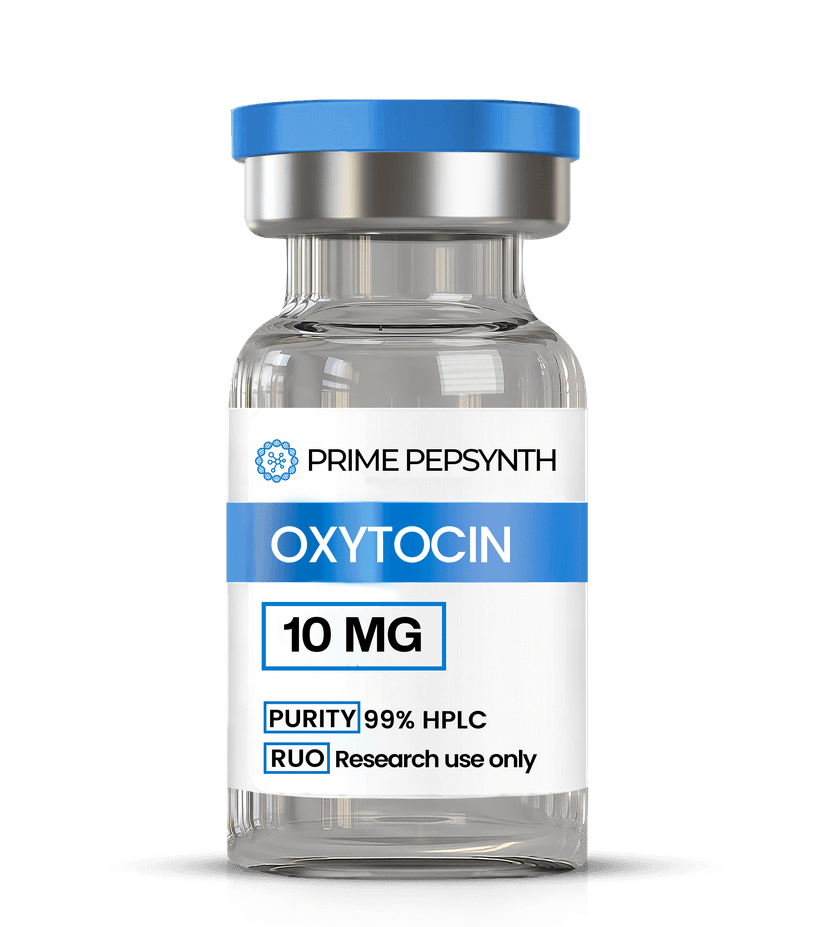
Oxytocin, a natural protein hormone, plays important role in sexual reproduction, childbirth, bonding between mother and child during breast feeding and wound healing. New research suggests that it may boost cognitive performance, reduce cardiovascular risk, and offset the effects of diabetes.
Oxytocin Overview
Oxytocin is best thought of as one protein with two separate natural functions.
First, it is a neuropeptide released by the hypothalamus to play important roles
in bonding, sexual reproduction, and childbirth. Oxytocin is also a standard
blood bome hormone, however, one that iS produced by the placenta of
pregnant women and that has effects on Childbirth, milk production, and
bonding with newborns- In men, a small amount of oxytocin is produced in the
testes to play a role in mating behavior and pair bonding. Research on oxytocin
has revealed it to play roles in:
•
• milk ejection/lactation,
• uterine contraction during childbirth,
• lowering blood pressure,
• changing neuron function,
• social bonding,
• fear and anxiety,
• mood, and
• wound healing.
Oxytocin Structure
Sequence: Cys(I)-Tyr-IIe-Gln-Asn-Cys(I )-Pro-Leu-Gly
Molecular Formula:
Molecular Weight: 1007.193 g/mol
PubChem CID. 439302
CAS Number: 50-56-6
Synonyms Pitocin, Endopituitrina, Ocytocin
What Is Oxytocin?
Oxytocin is a shott peptide, just nine amino acids in length, produced in the
hypothalamus and released by the posterior pituitary. It is also produced by the
placenta, ovaries, and testes. Like many peptide hormones, oxytocin starts out
lite as a much larger precursor molecule that iS subsequently cleaved to create
the active hormone. Interestingly, oxytocin has also been found to be produced
in the retina, the adrenal glands, and thymus, and the pancreas. Though
oxytocin is generally regarded as a neurohypophysial hormone, this thinking is
increasingly being thought of as outdated as the potential effects of the peptide
increase to include a number of different tissues.
Oxytocin Research
Oxytocin in Wound Healing
OMocin can actually modulate inflammation via action on certain inflammatory
cytokines. An interesting experiment looking at rates of wound healing in 37
couples found that social interaction that led to higher oxytocin levels actually
increased the rate of wound healing- The higher the oxytocin level, the greater
the rate of wound healing[ll. Similar research has found that hostility in
interpersonal relationships, particularly among couples, can reduce rates of
wound healing by as much as 40%. These couples also show lower levels of IL-
6, tumor necrosis factor alpha, and IL-I beta at the wound site[2].
Studying Oxytocin in Cardiovascular Risk
Based on its ability to improve rates of wound healing and modulate
inflammatory cytokines, researchers speculated that oxytocin may also play a
role in protecting the heart and vascular system. The peptide has been found to
help lower fat mass, improve glucose tolerance, decrease blood pressure, and
relieve anxiety[3]. All of these are important factors in cardiovascular disease
(CVD) and thus it iS not unreasonable to think that oxytocin might be a useful
adjuvant to existing CVD treatment
There is also good evidence to suggest that atherosclerosis develops, in certain
settings, as a result of suppressing expression of the oxytocin receptor.
Increasing oxytocin levels in people with reduced receptor density can maintain
cardiovascular integrity and, in some cases, can reverse atherosclerosis[41.
Research in rats suggests that oxytocin infusion directly into the heart during
ischemia (e.g. heart attack) can protect cardiomyocytes (heart muscle cells)
from death. According to Jankoski et al., chronic oxytocin treatment can
prevent the late-term development of dilated cardiomyopathy and may be
useful to precondition cardiac stem cells to aid in 'tissue regeneration through
direct differentiation, secretion ot protective and cardiomyogenic factors, and/or
their fusion with injured cardiomyocytes[51. "
Diabetes Management
Oxytocin likely increases glucose uptake by skeletal by boosting insulin
sensitivity, making it of potential use in treating diabetes. Research in mice has
also revealed that oxytocin plays important roles in lipid utilization, reducing
total body fat mass and rates of dyslipidemia. Deficiencies in oxytocin have
been shown to cause obesity even in the setting of normal food intake and
exercise activity, suggesting that the peptide plays critical roles in energy
homeostasis[8].
Research in lean and obese mice, interestingly, has snown that 0Mocin
treatment has no effect on glucose, insulin, and body composition in lean mice.
It appears only to affect these parameters in obese mice, suggesting that while
the peptide is useful in treating certain aspects of diabetes, it may not be
suitable in all settings[el. It appears that oxytocin has different effects in
diabetes than it does in the absence of the disease. In a study of patients with
diabetes, intranasal oxytocin reduce glucose and insulin levels and produced a
9 kg weight loss over the eight weeks of the trial. According to Barengolts,
"circulating 0Mocin is lower in type 2 diabetes versus normoglycemic subjects
and negatively correlated with glycosylated hemoglobin AIC and insulin
resistance[101.
Article Author
The above literature was researched, edited and organized by Dr- Logan, M.D-
Dr. Logan holds a doctorate degree from Case Western Reserve University
School of Medicine and a B.S. in molecular biology.