
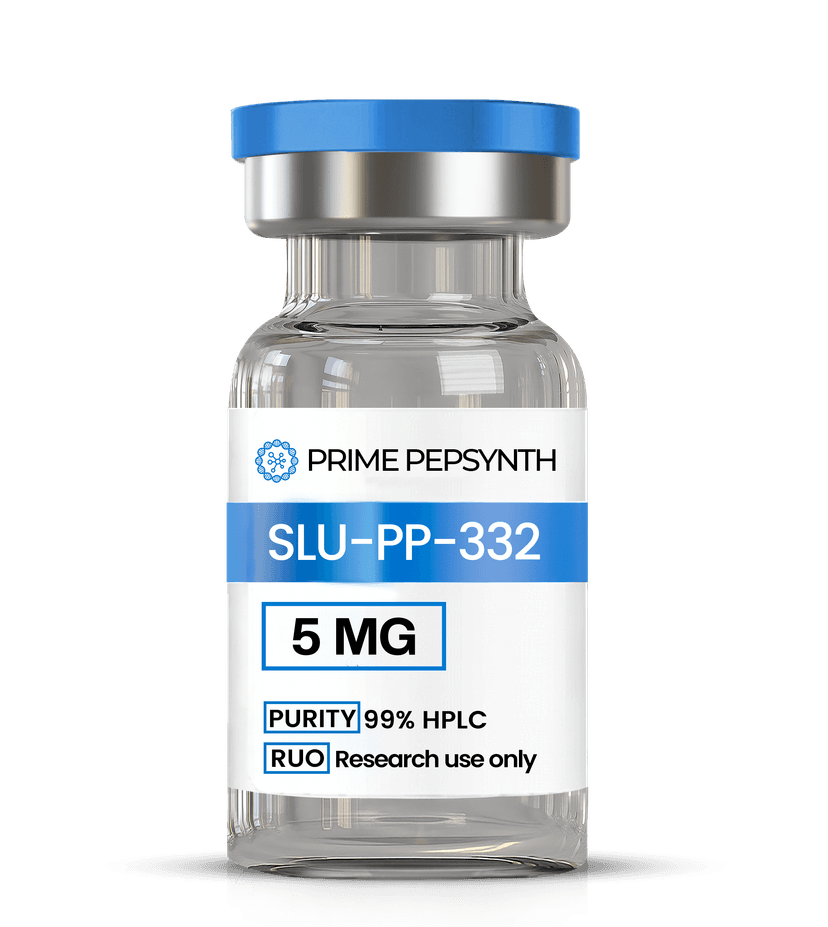
SLU-PP-332 is an experimental compound designed to mimic the metabolic effects of exercise by activating estrogen-related receptors (ERRs), particularly ERRα, ERRβ, and ERRγ. This activation leads to increased energy expenditure, enhanced fatty acid oxidation, and improved mitochondrial function.
SLU-PP-332: overview
Everyone knows that repetitive physical exercise leads to improved health and wellness.
Research has repeatedly revealed that exercise can thwart heart disease, fight obesity,
improve mood, boost cognitive function, and even help to prevent/treat a number of diseases.
For the most part, attempts to replicate the benefits of exercise using pharmaceuticals has
fallen short Even weight loss drugs were a bust until the recent advent of peptides like
semaglutide and liraglutide. A new breakthrough is undenvay, however, and researchers have
developed a compound that can replicate some of the benefits of exercise. SLIJ-PP-332 is an
estrogen-related receptor (ERR) agonist that binds primarily to ERR subclasses alpha and
gamma. It has been shown to improve skeletal muscle endurance, boost weight loss, improve
cardiovascular health, and protect the central nervous system against the ravages of aging and
disease. SLIJ-PP-332 is the closest science has yet come to replicating the effects of exercise
and has, predictably, generated a great deal of interest in research circles.
Published Research:
1. Metabolic Benefits in Obese Mice: A study published in the Journal of Pharmacology
and Experimental Therapeutics demonstrated that SLU-PP-332 administration in diet-
induced obese or genetically obese (ob/ob) mice resulted in increased energy
expenditure and fatty acid oxidation. These metabolic changes were accompanied by
decreased fat mass accumulation, suggesting potential therapeutic applications for
metabolic disorders. SLU-PP-332 has been shown to promote weight loss and reduce
fat accumulation in obese mice without affecting food intake or requiring increased
physical activity
Washington University Profiles
2. Enhanced Exercise Endurance:
Research repotted in ACS Chemical Biology found
that SLU-PP-332 increased the proportion of oxidative muscle fibers in mice, leading to
enhanced exercise endurance. This effect was attributed to improved mitochondrial
function and cellular respiration in skeletal muscle cells.
Washington University Profiles
3. Potential Treatment for Heart Failure: Studies presented by the American Chemical
Society indicated that SLU-PP-332 improved cardiac function in mouse models of heart
failure. The compound enhanced mitochondrial ultrastructure and upregulated
pathways associated with oxidative phosphorylation and fatty acid metabolism,
suggesting its potential as a therapeutic agent for heart failure.
American Chemical Society
While these findings are promising, it's important to note that SLIJ-PP-332 is still in the
preclinical stage of development. Further research, including human clinical trials, is
necessary to fully understand its efficacy and safety profile.
SLU.PP-332•. structure
Chemical Formula: C18 H14 N2 O2
Molecular Weight: 290.3 gimol
PubChem CID: 5338394
CAS No.: 303760-60-3
Synonyms: 4-Hydroxy-N'-(naphthalen-2-ylmethylene) benzohydrazide
What Is SLU-PP-332?
SLU-PP-332 is one of a family of compounds known as estrogen-related receptor agonists (ERR$
Research in animal models has revealed this compound to have a number of effects including.
• Elevating energy expenditure (primarily through increased fat burning),
• Increasing exercise tolerance and physical endurance, and
• Increasing mitochondrial density and function to improve muscle function.
Research indicates that SLU-PP-332 activates the estrogen receptor-related orphan receptors, which are
called ERRs for short ERRs are found with in nucleus of cells and their endogenous (natural) ligand has
yet to be unambiguously identified, which is why they are referred to as "orphans." These receptors come
in three types as follows:
• ERRa
• ERRß
• ERRv
It is important to note that ERRs, despite their name, are not regulated by estrogen The name arises from
the fact that the gene for ERRa was first isolated due to homology to the gene for the estrogen receptor
That is where their similarities end, however, as evidence to date indicates that estrogen plays no role in
the regulation of ERRS.
These receptors are known to regulate gene expression pattems with resulting impacts on energy
homeostasis, oxidative metabolism, and mitochondrial biogenesis. Stimulation of these receptors can
increase energy expenditure and fatty acid oxidation, leading to an increased rate fat loss. They also
enhance mitochondrial function, particularly in heart and skeletal muscle cells to improve cardiovascular
health as well as exercise tolerance.
One way in which scientists determined that ERRs are important to exercise tolerance is by creating
mouse models, called knockouts, that lacked the ERR genes and thus ERRs in skeletal muscle. These
mice showed profound intolerance to exercise. ERRa and ERRY appear to be most important for exercise
tolerance, with knockout mice for these two genes snowing pale muscles under microscopic examination
as well as severe exercise intolerance and decreased oxidative capacity They also showed an inability to
switch to lipid (fat) utilization which is critical for endurance exercise [21.
ERRa regulates genes involved in gluconeogenesis (the production of blood sugar from non-carbohydrate
energy stores), tatty acid metabolism, and brown adipose tissue thermogenesis. It also regulates
cholesterol, glucose, insulin, and triglyceride levels. It is a necessary receptor for responding to
physiological and pathological stresses and has been shown to be a target of the statin class of drugs.
ERRv is much like ERRa. It is an important regulator of mitochondrial activity, plays a vital role in gene
transcription, and is a major target of bisphenol A Interestingly, the binding of bisphenol A (BPA) to the
ERRy receptor may be one reason that BPA has been linked to metabolic syndrome as well as cancer.
BPA binding to ERR}' likely interferes with its ability to regulate mitochondrial activity leading directly to
glucose dysregulation and, eventually, metabolic syndrome. BPA has long been known to be an endocrine
disrupter, showing effects on bone strength and sexual development in mice [31. Understanding the
receptors to which BPA binds not only helps researchers to better counteract the effects of this well-known
chemical, it provides deeper insight into mammalian development as well as the pathogenesis of certain
disease conditions.
ERRv is also being investigated for a potential role in the pathogenesis of Parkinson's disease. It seems
that Estrogen-related receptor gamma deficiency may hasten synudein-mediated toxicity while
overexpression can reduce inclusion body load and delay synuclein-mediated toxicity. Thus, ERRv
agonists, like SLIJ-PP-332 are under investigation as potential treatment in Parkison's disease [41.
Mitochondrial dysfunction has long been thought to contribute to Parkinson's disease and thus it makes
sense that ERRy has shown benefit in this conditiom
ERRß is a littler different from the other two ERRs, with its primary function seemingly being to regulate
the transition of pluripotent stem cells from one state to another. Thus, ERRß is likely important in tissue
regeneration, growth, and development. It is the least well understood of the ERRS.
About The Author
The above literature was researched, edited, and organized by Dr. Logan, M.D- Dr- Logan holds a
doctorate degree from Case Westem Reserve IJniversity School of Medicine and a a-S. in molecular
biology.