
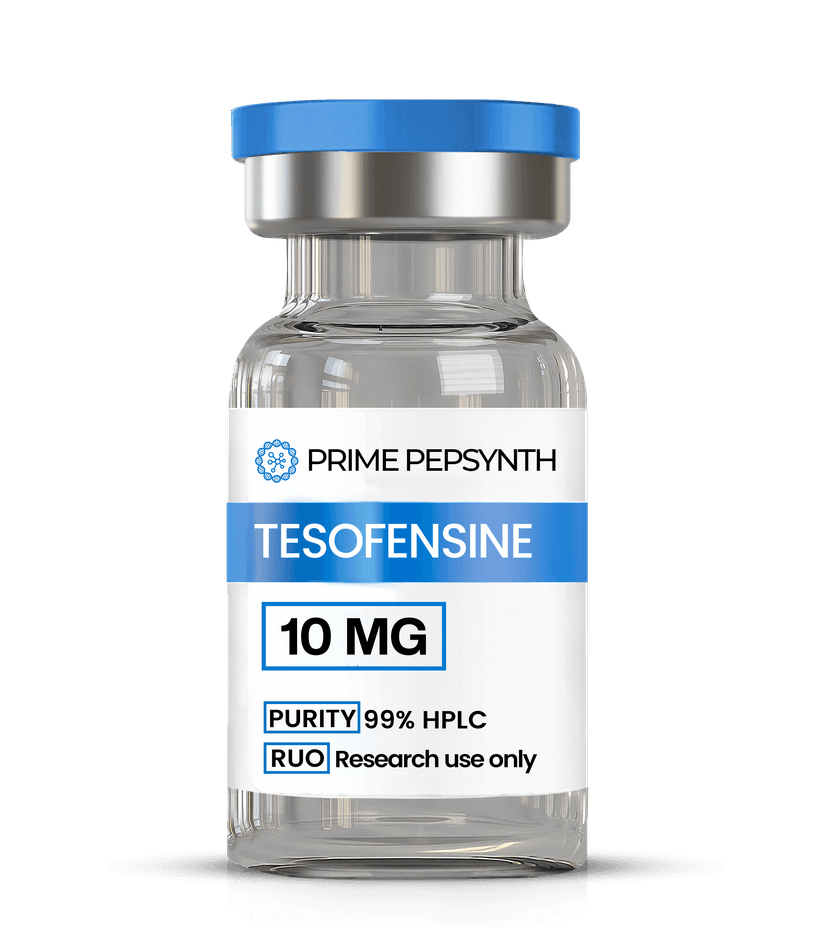
Tesofensine
is a synthetic small-molecule research compound classified as a triple monoamine reuptake inhibitor of serotonin, norepinephrine, and dopamine. It modulates central appetite and metabolic signaling through presynaptic transporter inhibition and hypothalamic regulation in experimental models. Tesofensine is used in neuroendocrine and metabolic research investigating neurotransmitter dynamics, energy expenditure, and hypothalamic control mechanisms.
References:
Appel L et al., Neuropsychopharmacology, 2011 36(3):654–662
Astrup A et al., Lancet, 2008 372(9653):1906–1913
Eisenstein SA et al., J Pharmacol Exp Ther, 2015 352(1):129–138
These capsules are provided exclusively as inert containers for the dry transport, storage, and handling of laboratory research materials. They are not dosage forms and are not intended for ingestion or administration. They must not be used as drug delivery systems, consumed, or administered in any form. For Research Use Only: Not for use in humans or animals. Not for diagnostic or therapeutic purposes.
Tesofensine
Tesofensine (also called TE) is a novel norepinephrine, dopamine, and
serotonin reuptake inhibitor (triple reuptake inhibitor) that was initially
developed for the treatment of neurodegenerative diseases like
Parkinson's disease and Alzheimer's disease. As it turns out, the benefits
of tesofensine extend further to include increased weight loss, even for
people who do not undergo dietary changes. Tesofensine is now in phase
Ill clinical trials as a weight loss aid.
What is Tesofensine?
Tesofensine is a member of the class of medications known as "triple
reuptake inhibitors." It prevents the presynaptic reuptake of
neurotransmitters norepinephrine, dopamine, and serotonin. This leads to
an increase in the effects of these neurotransmitters.
Tesofensine is a member of the phenyltropane class of drugs, which were
originally developed to reduce cocaine dependency. In fact, this class of
drugs arose as a result of efforts to disassociate the stimulant properties of
cocaine from the factors that cause it to be addictive. In other words, the
phenyltropane drugs are designed to stimulate the central nervous system
without creating addiction.
It should come as no surprise, given their origins, that compounds like
tesofensine have profound effects on neurotransmission, particularly
dopamine, which is responsible for reward and craving behaviors.
Research shows that tesofensine has no potential for recreational abuse,
suggesting that at least some of the goals of efforts to dissociate the
properties of certain stimulants have been achieved[l]
Tesofensine Structure
Amino Acid Sequence: Not a peptide
Molecular Formula: C17HzC12NO
Molecular Weight: 3.277 g/mol
PubChem CID: 11370864
CAS No: 195875-84-4 (Deprecated: 402856-42-2)
Alternative Names: TE, NS-2330
How Does Tesofensine Work?
Given its ability to increase dopamine levels, tesofensine was originally
developed for the treatment of Parkinson's disease. During clinical trials,
however, a significant "Side effect of weight loss was consistently noted.
Because the compound proved to be inferior to existing medications in the
treatment of neurodegenerative disease, but nearly twice as effective in
promoting weight loss as any existing compound on the market, the
decision was made to pivot to trials on weight loss[21
The ability of tesotensine to increase levels of neurotransmitters in the
brain does not directly account for its ability to increase satiety and
feelings of fullness. Neither does this factor account for the hypothesized
ability of tesofensine to alter energy balance and increase metabolism. At
this point, the exact reason that tesofensine is such an effective weight
loss agent remains unclear.
It was originally thought that tesofensine was a relatively balanced
reuptake inhibitor, increasing levels of dopamine, norepinephrine, and
serotonin in roughly equal proportions. This turns out to not be the case.
After more extensive study, it was found that tesofensine is much more
effective in boosting norepinephrine levels than serotonin levels. It is better
at boosting both of those neurotransmitters than it is at boosting dopamine
levels[3]. This difference may explain why the drug wasn't particularly
successful in the treatment of Parkinson's disease.
Tesofensine activity is not, however, strictly limited to the neurotransmitters
just described. Research shows that it is also an indirect potentiator of
cholinergic neurotransmission. Of course, this is why the drug was
originally of interest in Parkinson's disease and suggests that its dopamine
effects might be more nuanced than is currently understood- Tesofensine
appears to promote cognition, leaming, and memory via the cholinergic
pathway. This pathway ultimately leads to increased BDNF levels in the
brain[3]. BDNF stimulates neuron growth and has been shown in previous
research to benefit people with depression, cognitive decline, and certain
neurological conditions.
Tesofensine and Weight Loss
So, just how effective is tesofensine when it comes to weight loss? Phase
118 clinical trial results indicate that tesofensine produces about 12.8 kg
(—28 pounds) of weight loss over six months wnen administered as a 1 mg
dose to people who have a 300 kcal deficit in their diet. When compared to
placebo, this is a 6-fold increase in weight loss[41. Compared to currently
available FDA-approved weight-loss medications, tesofensine is twice as
effective. The average weight loss in all other clinical trials of currently
available drugs was just 3-5 kg ot reduction over 6 months. In other words,
people lose twice as much weight with tesofensine as they do with any
currently available weight-loss aid approved by the Food and Drug
Administration.
Of course, it isn't just the efficacy of tesofensine that makes it attractive as
a weight loss agent. The compound is also easily administered by mouth
just once per day. The side effect profile has also proved to be minimal in
clinical trials, consisting mostly of dry mouth, headache, GI upset, and
difficulty with sleeping. Both the dry mouth and difficulty sleeping show
dose-dependent prevalence as well as attenuation over long-term use[4],
[5]. So, it is possible to greatly mitigate these side effects by starting out on
a low dose of tesofensine and then increasing it once attenuation has
occurred.
Research shows that tesofensine
produces the greatest weight loss when
paired with dietary caloric restrictions
and exercise. However, research shows
that results can still be expected when
tesofensine is taken and no differences
in diet or exercise are encouraged. In
one Clinical trial, men treated with
tesofensine lost weight despite the fact
they were instructed to maintain their
standard diet and levels of physical
activity. These men lost 1.8 kg in two
weeks when compared to placebo and
reported higher feelings of satiety and
fullness as well as decreased desire to
eat There was, additionally, evidence
that men in the tesofensine arm of the
study expended almost 5% more energy
while they slept than those in the
placebo arm. This correlates well with
the additional finding that fat oxidation is
increased by tesofensine[6].
One interesting aspect of tesofensine research in obesity has
been the revelation that satiety appears to be centrally controlled
and, perhaps, is harder to modify permanently than was once
thought. The administration of tesofensine has a profound effect
on satiety and hunger, thus greatly diminishing appetite. However,
withdrawal of the drug, even after weight loss, results in an almost
immediate return to baseline sensations. Reintroduction of
tesofensine will suppress them again[7]- This suggests that
appetite sensations are more permanent and ingrained than once
thought and may, in fact, contribute to weight gain to a higher
degree than once believe. In other words, it really isn't a matter of
willpower because some people are constantly being bombarded
with signals that they are not full. Tesofensine is the first option to
help quell those intrusive thoughts about hunger and the proof of
its effectiveness is in the clinical trials showing significant weight
loss.
In the past, it has been noted that compounds affecting appetite
generally lose their efficacy over time. The same is true of
tesofensine, with its ability to stave off hunger diminishing (but
never completely stopping) With prolonged use. That said,
tesofensine shows drastically longer-lasting hypophagic effects
than other weight reduction aids and, more importantly, snows
substantial rebound to baseline after a short holiday. In other
words, a short break from tesofensine restores its ability to
suppress appetite and hunger191. No trials have been carried out
looking at the long-term weight loss ot cycled tesotensine, but
there is good reason to believe that the drug, when cycled
appropriately, may produce even greater weight loss than what
has currently been observed.
Tesofensine and Blood Sugar
Research in rats indicates that tesofensine can help to improve
glycemic control in a dose-dependent manner. In basic testing of
glucose tolerance, tesofensine greatly attenuates the insulin
response. This means less insulin is released in response to a
sugar load- How could this contribute to weight loss though?
Insulin is a major cause of fat deposition. When there is too much
sugar to store in the liver or muscle, insulin crams it into fat
storage- This is why high glycemic index foods, like white breads,
lead to higher levels of fat depositiom They flood the body with
sugars which insulin simply clears as quickly as possible. By
attenuating this effect, tesofensine helps to lower fat deposition
even in the setting of high blood sugar[91.
It is also true that the accumulation of fat creates a kind of self-
reinforcing spiral. Once fat is deposited, it influences insulin
signaling in a number of different ways that lead to additional fat
depositiom This additional deposition then further stimulates fat
accumulation.
accumu a Ion.
Even worse, fat has been shown to be a source of inflammation,
particularly once a certain threshold is reached. This inflammation
has been linked to everything from insulin resistance and the
development of diabetes to heart disease and even
neurodegenerative conditions. By breaking this cycle of fat
deposition and increased inflammation, tesofensine is helping to
shift the balance of metabolism and give the body a fighting
chance against adiposity.
Tesofensine and Brain Health
Despite the abandonment of tesofensine in the treatment of
neurodegenerative diseases, there is still good evidence that the
compound has beneficial effects on cognition, memory, and
neurogenesis. Though the dopamine boosting effects ot
tesofensine appear to be too small to be relevant in the treatment
of Parkinson's disease, there is still interest in using the peptide to
improve cognitive function in other settings.
Research in rats shows that tesofensine boosts expression of
brain derived neurotrophic factor and, as a result, increases
neurogenesis in the rat hippocampus[31. BDNF plays several
roles in the brain including boosting cell survival and reproduction
in addition to increasing synaptic transmission- Research shows
that BDNF signaling is altered in a variety of disease conditions
including depression, schizophrenia, obsessive-compulsive
disorder, and Alzheimer's disease among others. unfortunately,
research into the direct delivery of BDNF into the central nervous
system of humans and animals has not shown any benefit in
various neurodegenerative diseases. This suggests that the role
of BDNF is more complicated than science has revealed to this
point. There is likely to be future research looking at not just the
ability of tesofensine to influence BDNF, but the impact that this
has on brain function, structure, resilience to injury, and perhaps
even our abilities to learn and remember.
Tesofensine and Depression
A subcategory of brain health in Which tesofensine may be helpful
is depression. Research shows that exposure to stress can
decrease BDNF levels in the brain and, if the exposure is
prolonged, lead to atrophy of the hippocampus. This change in
hippocampal structure has been directly linked to depression,
especially major depression, and it is thought that existing
treatments may be beneficial because they help to protect agains
or reverse these changesIIOl.
Tesofensine is known to improve BDNF levels and promote
neurogenesis in the hippocampus, so it likely has anti-depressant
properties. This, however, has not been the primary focus of
research, as the compound was originally developed for its
dopaminergic properties and then was discovered to have anti-
obesity properties. All of that having been said, tesofensine offers
a unique alternative to both anti-obesity and antidepressant
applications because its properties cross both fields. It can be
used as a standalone in either case, but the idea that it could
have a 'two birds with one stone" effect in the setting of weight
loss and mood disorder is compelling[ll]. This dual nature of
tesofensine will likely make it a go to for people who struggle with
weight and depression, two conditions that appear to have more
than a few commonalities.
Tesofensine and Pain Management
The use of antidepressant medications in pain management is not
new. Tri-cyclic antidepressants were among the first drugs
available for treating mood disorders and have long been known
to reduce nociception (pain perception), particularly in conditions
like fibromyalgia. Research shows that the anti-nociceptive (anti-
pain) properties of standard antidepressants, Which affect only
serotonin and norepinephrine, are enhanced by the addition of
dopamine boosting agents[12]. Thus, there is speculation that
triple reuptake inhibitors like tesofensine may provide benefits in
pain management.
Tesofensine and Safety
Anti-obesity drugs have a long history of cardiovascular side
effects. Fen-Phen is probably the most famous of the diet pills to
have caused serious cardiac issues (e.g., heart valve damage)
and though things have improved since 1997 when Fen-Phen was
removed from the market, anti-obesity drugs are still hard on the
heat Sibutramine, for instance, has been associated with major
cardiovascular events and was itself eventually withdrawn from
the market in 2010[13]. The result is a death of options for treating
obesity and feelings of hopelessness among those who seek
relief. Phentermine, one ot the ingredients in Fen-Phen can be
used safely for short periods of time, but its reputation has
produced fear and thus most people and healthcare providers are
unwilling to use it.
To date, tesofensine has shown a substantially improved risk
profile compared to other anti-obesity drugs. In particular, its
central action on neurotransmitter reuptake as opposed to
peripheral action of lipase inhibitors, amphetamines, and other
compounds makes tesofensine unique[14]. There was some
argument about trial design and whether side effects of
tesofensine had been under reported[151. The claim is that
investigators did not list people with headache, migraine, stress,
and depression prior to treatment as having those side effects if
they experienced it during treatment. This is a valid criticism of the
study design because a distinction should have been made
between existing symptoms and new, but similar, symptoms- A
change in trial design would likely have had no major impact on
tesofensine side effect reporting.
Tesofensine Overview
Tesofensine is a novel inhibitor of the reuptake of serotonin,
norepinephrine, and dopamine. By increasing levels of all three of
these neurotransmitters, tesofensine increases BDNF expression
patterns and promotes neurogenesis in the amygdala. None of
this explains why it is the most effective weight loss agent
developed to date, however- Research shows that tesofensine is
at least twice as effective as any currently approved weight loss
agent and with far fewer (and far less serious) side effects. While
research is ongoing to get tesofensine to market as an anti-
obesity drug, there is deeper research being carried out to
understand how this molecule affects the sensations of hunger
and satiety to produce weight loss. While tesofensine is proving to
be a remarkable weight loss agent, it may yet prove to be even
more remarkable by helping to elucidate the connection between
the human brain and gut that controls eating behavior to begin
with. With that knowledge, science could virtually eliminate
obesity.
Tesofensine exhibits minimal side effects, good oral and excellent
subcutaneous bioavailability in mice. Per kg dosage in mice does
not scale to humans. Tesofensine for sale at Peptide Sciences is
limited to educational and scientific research only, not for human
consumption. Only buy Tesotensine if you are a licensed
researcher
Article Author
The above literature was researched, edited and organized by Dr
E. Logan, M.D. Dr. E. Logan holds a doctorate degree from Case
Western Reserve I-Jniversity school of Medicine and a B.S. in
molecular biology.