
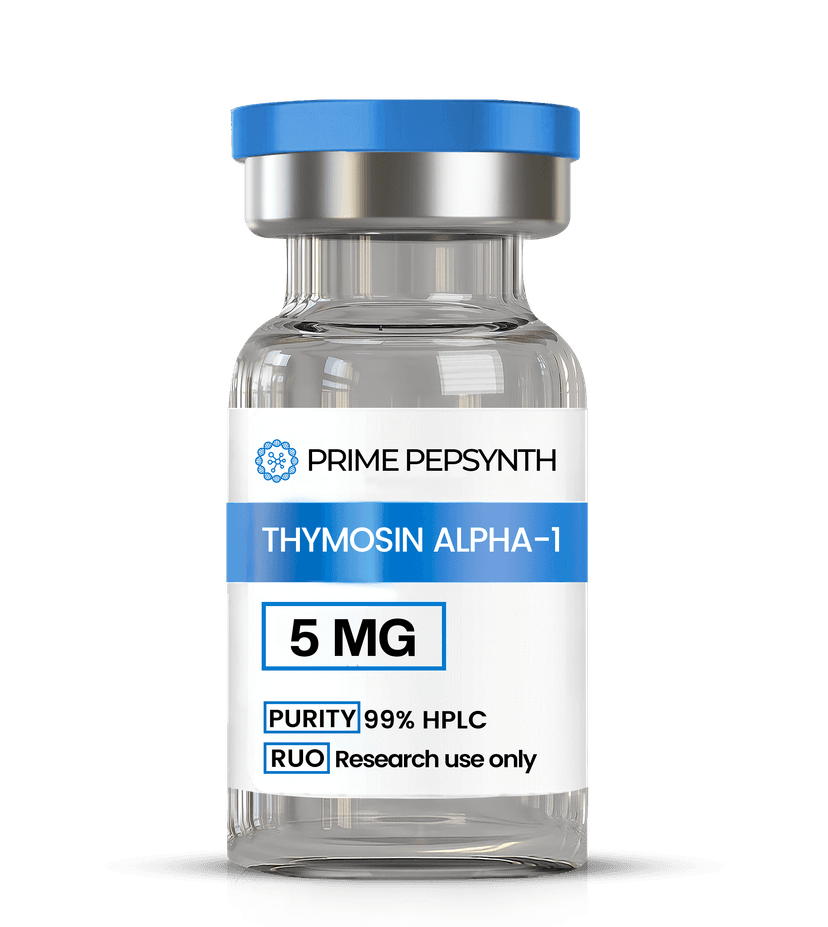
Thymosin Alpha-1
is a synthetic polypeptide consisting of 28 amino acids derived from the thymic hormone thymosin fraction 5. It has been utilized in research exploring modulation of T-cell-related pathways, toll-like receptor activation, and cytokine-associated signaling. In vitro and in vivo models suggest that Tα1 interacts with the MyD88/NF-κB cascade, offering insight into signaling dynamics and system homeostasis within experimental settings.
For research use only. Not for human consumption.
References:
Garaci E et al., Ann NY Acad Sci, 2007 1112:225-234
Li J et al., Front Immunol, 2010 1:1-10
Tao N et al., Molecules, 2023 28(8):3539
What Is Thymosin Alpha 1 ?
Thymosin alpha-I is a naturally occurring peptide fragment that was discovered
in 1972. It has since been studied in clinical trials for cystic fibrosis, infection
(e.g. tuberculosis, cytomegalovirus), respiratory disorders, chronic hepatitis, and
cancer It is currently approved for use in fighting chronic hepatitis B and C
infections in 35 under-developed nations.
Thymosin Alpha-I
Research
Thymosin Alpha-I Modulates the Immune System
Thymosin alpha-I , first isolated from tissue of the thymus gland, is a potent
regulator of immune function. The thymus is responsible for making T-cells and
for ensuring that they mature properly, T-cells are some of the most important
parts of the adaptive immune system, where they help the immune system
remember past infections and improve the function of other immune system
cells to boost their ability to fight infection.
Research in mice without thymus glands shows that thymosin alpha-I alone is
enough to restore immune function and prevent widespread infection_ The
peptide works at the most fundamental levels of the immune system to activate
signaling pathways and stimulate the production of cytokines and other
molecules that help to coordinate the activities of various cells in the immune
system[ll. In other words, thymosin alpha-I has broad, positive effects on the
immune system.
One way in which thymosin alpha-I may be of benefit is in vaccine construction.
Right now, many vaccines consist of inactivated (killed) pathogens because
administering live pathogens, even when they are weakened, is risky
Unfortunately, inactivated vaccines are less effective and thus immunity is not
as great Thymosin alpha-I may solve this problem by boosting the response of
the immune system to inactivated vaccines. The net results would include not
only boosted immunity, but longer duration of immunity[2]. This may be of
benefit, particularly in the setting of severe disease like avian influenza, HIV,
and more.
Another way in which the ability of thymosin alpha-I to regulate the immune
system may be of benefit is in the setting of sepsis. Sepsis is a life-threatening
condition caused by an over-inflated immune response to infection. The ability
to regulate the immune response in this setting could save lives and prevent
organ damage. Research suggests that thymosin alpha-I lowers mortality in
patients with sepsis and reduced long-term complications[31. Though ongoing
research is needed, the early results suggest that thymosin alpha-I may soon
be approved as an aguvant therapy for sepsis.
Thymosin Alpha-I Promotes Nerve Growth
The immune system plays very important roles in the growth, development, and
maintenance of the central nervous system, particularly the brains of developing
mammals. Research in mice indicates thymosin alpha-I is a prominent
potentiator of neurodevelopment and that peripheral administration of the
peptide can actually boost cogniüve function. It appears that thymosin alpha-I
affects a number of genes responsible for neuron growth and the development
of connections between neurons- The peptide alters the environment within the
nervous system to favor growth and develop while simultaneously blocking
pathways responsible for inflammation and neuron dysfunctionfr]. In short,
thymosin alpha-I actually improves brain structure and function. There is
interest in using the molecule to address neurodevelopmental delays, such as
those associated with cerebral palsy.
Thymosin Alpha-I Fights Fungus
Dendritic cells, a specific type of cell in the immune system, are important in
helping the immune system to recognize fungal infections. Thymosin alpha-I
has been shown to induce maturation of dendritic cells, thereby boosting the
ability of the immune system to fight fungal infections(S). The peptide has also
been found to activate T-helper cells in mouse models of aspergillus infection, a
type of server fungus. Scientists hope to use thymosin alpha-I as an adjuvant
therapy to boost the effectiveness of standard anti-fungal treatments.
The role of thymosin alpha-I in regulating dendritic cells cannot be overstated
Dendritic cells are responsible for taking antigens, bits of invading bugs like
bacteria and fungi, and presenting them to other immune system cells in a way
that makes it easy for those cells to recognize the antigens and respond
appropriately% Dendritic cells are found in high numbers in the skin, nose, lungs,
and GI system where they act as one of the first responders of the immune
system. By regulating dendritic cells, thymosin alpha-I affects immune system
functioning at one of its most fundamental levels[6].
Thymosin Alpha-I and Hepatitis
Thymosin alpha-I is an effective and highly affordable treatment against chronic
hepatitis B and C infections. It is also an effective immune stimulant and can be
co-administered with vaccines for both viruses to improve efficacy. Thymosin
alpha-I is currently approved for treatment of hepatitis B and C in over 35
different countries[71
Thymosin Alpha-I and HIV
Even though antiretroviral therapy has come a long way since HIV was first
discovered in the 1980s, complete restoration of immune function is still not
possible Oddly enough, antiretroviral therapy itself has been linked to certain
deficits in the immune response (particularly cytotoxic T-cells) as well as to
persistent inflammatory conditions. Research shows that thymosin alpha-I may
be of benefit in this particular population, helping to restore immune regulation
and improving overall quality of life for individuals taking highly active
antiretroviral therapy (HAART)C].
Interestingly, thymosin alpha-I may also boost the ability of the body to fight
HIV infection. It appears that the peptide stimulates CD8 T-cells to release a
number of factors that inhibit HIV infection of other immune cells and prevent
latent HIV from becoming activef].
Thymosin Alpha-I Research and Blood Pressure
New research indicates that thymosin alpha-I blocks angiotensin converting
enzyme (ACE) and thus can reduce blood pressure(0]. ACE is a common target
of prescription drugs, like lisinopril, in certain individuals with high blood
pressure. Inhibition of ACE has been shown to not only lower blood pressure by
relaxing blood vessels, but can also reduce cardiac remodeling, slow the
progression of atherosclerosis (plaque buildup), and improve kidney function.
Unfortunately, most ACE inhibitors come v,'ith a number of side effects. It is
possible that thymosin alpha-I may offer the benefits of ACE inhibition without
the side effects caused by currently available drugs.
Thymosin Alpha-I Research and Cancer
Research using human lung cancer cells (A549) indicates that thymosin alpha-I
has anti-proliferative effects, reducing both the growth and metastasis of
cancerous cells- The peptide also appears to reduce cell migration, which can
help to reduce penetration of cancer cells into surrounding tissue (i.e.
Research combining thymosin alpha-I with dacarbazine, a common
chemotherapy, showed an increase in progression-free survival rates and no
increase in rates of toxicity['2], This indicates that thymosin alpha-I boosts
the effects of the chemotherapy in reducing cell proliferation. Given the
peptide's natural occurrence, it isn't unreasonable to speculate that it may one
day form part of the basis of a cancer vaccine designed to prevent tumor
development rather than treat cancer after it has already occurred.
Recently, scientists developed a long-acting version of thymosin alpha-I and
tested it against breast cancer cells in mice. Results showed that the modified
thymosin alpha-I molecule was even more effective in inhibiting grov,'th of
breast cancer cells. The modified peptide appeared to boost levels of CD4 and
CD8 cells while simultaneously increasing interferon gamma and interleukin-2
levels. This was particularly important in patients being treated with steroids for
the swelling caused by certain cancers[14 [IS].
Thymosin alpha-I has been tested and is undergoing active testing in a number
of different cancers. Positive results have been seen in.
• breast cancer,
• melanoma,
• liver cancer,
• lung cancer, and
• colon cancer.
Thymosin Alpha-I Research and Inflammatory Pain
Inflammatory pain is transmitted through specific pathways in the peripheral and
central nervous system. Given the strong anti-inflammatory effects of thymosin
alpha-I , scientists speculated that the molecule could effectively reduce pain as
well. Research in mice suggests that this is indeed true and has even identified
the specific pathways that thymosin alpha-I interferes with. It turns out that
thymosin alpha-I acts directly at the sight of inflammation to reduce the
production of cytokines and other molecules (e.g. T NE-alpha, IL-Ibeta, etc.)
that trigger pain in the first place[16]. This mechanism of action is drastically
different from typical anti-inflammatory pain relievers and may offer improved
pain relief with fewer side effects than existing drugs.
Thymosin Alpha-I and Cystic Fibrosis
One of the primary complications of cystic fibrosis (CF) is rampant inflammation
that leads to poor mucous clearance, increased rates of infection, and other
problems. All of these problems stem from a mis-folding of a specific protein
called CFTR Research indicates that thymosin alpha-I can reduce
inflammation and even improve function of the CFTR protein[17]. There is hope
that the peptide may offer an effective single-molecule therapeutic approach to
treating CF.
Damaged Teeth and Thymosin Alpha-I
Research into the benefits of thymosin alpha-I in the setting of avulsed (pulled
out) and replanted permanent front teeth indicates that the peptide can improve
healing of the gums and soft tissue surrounding the injury and promotes survival
of the replanted toothl a]. Though more research is required, the findings
indicate that thymosin alpha-I may be of huge benefit in the setting of traumatic
tooth damage, making it easier for dentists to rescue teeth that have been
knocked out.
The Future of Thymosin Alpha-I
The potential applications of thymosin alpha-I are too numerous to list in any
reasonable summary. I'%at is notable, however, is that the peptide is already
being used in a number of countries as a legitimate medical treatment.
Researchers are currently looking at ways to improve the eficacy of the peptide
and produce it faster and more affordablyl'9]. There is good reason to believe
that thymosin alpha-I variants will be investigated in clinical trials for a number
of conditions in the coming years. From cancer to infection, the peptide has
shown great promise as an immune system modulator with few side effects
Thymosin Alpha-I exhibits minimal side effects, low oral and excellent
subcutaneous bioavailability in mice. Per kg dosage in mice does not scale to
humans. Thymosin Alpha-I for sale at Peptide Sciences is limited to
educational and scientific research only, not for human consumption. Only buy
Thymosin Alpha-I if you are a licensed researcher.